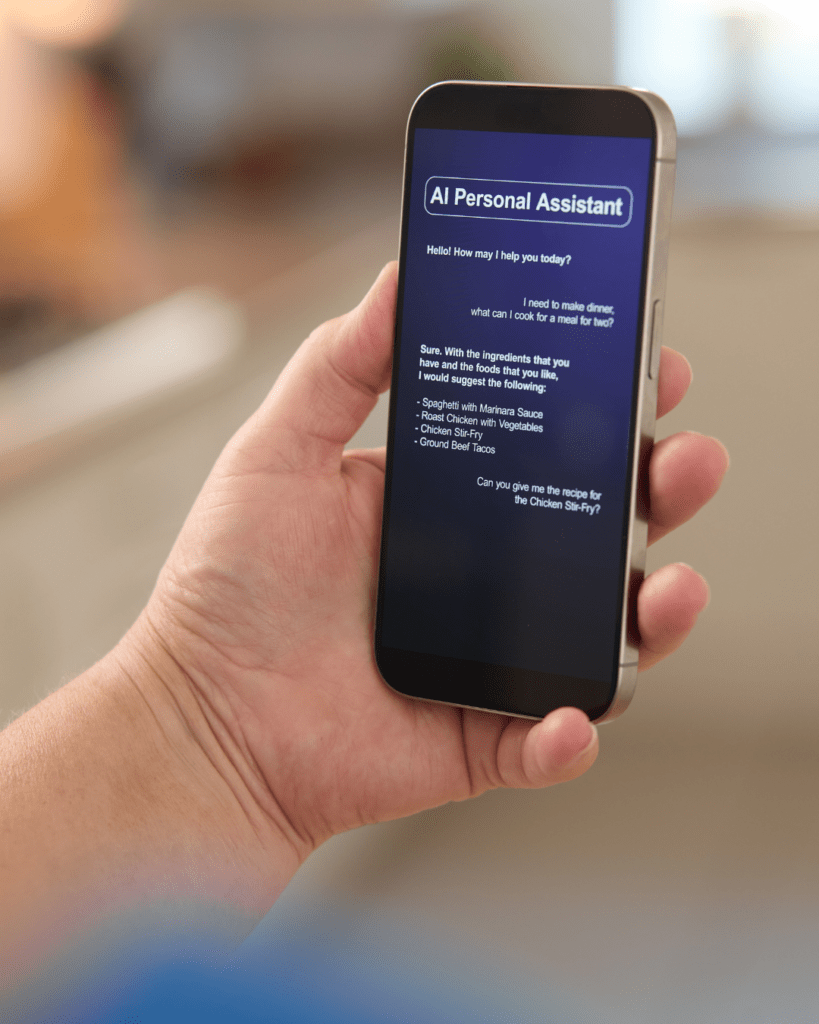
What you have to ask AI are not life altering questions but the menial stuff that you need direction with. For example, as a web developer, I still start by writing a paragraph or two of what I believe should go on the page. The paragraph or paragraphs contain the main gist of what I have in mind.
And then I ask the AI application to either: do a rewrite of what I wrote or get its opinion on what I wrote. It will come out with a polished version of what I wrote. The kicker is this: you have to read, review, and annotate what the AI produces. Mind you, not everything it will write is 100% accurate. That last few percent—the part AI consistently gets wrong—is where most credibility is lost.
I remember a person submitted a Tagalog translated document. The individual, I presume, ran the document through an AI app and translated the word chapter into “kabanata.” The word has several meanings: a branch of an organization, a section of a book, a life stage, or a division in religious or legal texts. He did not review what AI did, signed the document and submitted it. Everyone reading this can presume the outcome.
AI models are trained on massive datasets. You have to be as detailed as possible in telling AI what to do. AI is a powerful co-pilot, but it should never be the captain. Once humans surrender judgment, AI credibility collapses, and errors move from harmless to reputation-damaging. You tell it what to do but you have to review the information or data it produces.
Remember, you always have to have a “human-in-the-loop” check to catch errors. AI is not perfect even if it seems perfect. It probably does 95% of the work. However, that crucial 5% is what tips the balance. It can make you look like a seasoned operator who knows their craft, or it can make you look like a clown—leaving you with a massive credibility gap and a document that is purely and painfully unprofessional for whoever has to read it. That final 5%—context, intent, and accountability—is where AI credibility is either secured or destroyed.
In closing, AI is a brilliant assistant and a dangerous master. Don’t let your credibility be tarnished by five minutes of saved time. Your expertise lives in that final 5%. Before you hit submit, make sure everything sounds or reads as it is supposed to. After all, the only thing worse than a mistake is when it becomes, pure cringe.
The “Cringe-Proof” Checklist: 5 Steps Before You Hit Submit
Before you sign that document or hit send, run your AI-assisted content through this final 5% credibility check:
- The “Domain” Test: Did the AI use the right vocabulary for the field? (e.g., Is it using legal terms for a contract, or literary terms for a business proposal?)
- The Polysemy Audit: Identify “trigger words” like Chapter, Issue, or Bank that have multiple meanings. Ensure the Tagalog (or target language) translation matches the specific intent.
- The Tone Check: Does it sound like a human wrote it, or is it “Grammatically Correct but Culturally Broken”? If it feels like a textbook or a fairy tale, it needs a rewrite.
- The “Back-Translation” Trick: Take the translated text and put it back into the AI to translate it back to English. If “sangay” comes back as “branch” you’re safe; if “kabanata” comes back as “story chapter,” you’ve got work to do.
- The Native “Vibe” Check: If the stakes are high, send a one-paragraph snippet to a native speaker. Ask them: “Does this sound professional, or does it sound like a robot?”
AI provides the speed, but you, myself, we provide the soul—and the context. Don’t let a 95% great job be ruined by a 5% credibility gap.